

Welded wire mesh is a grid made from steel wires arranged in perpendicular (longitudinal and transverse) directions and joined at each intersection using resistance welding. This process creates a strong, fixed structure where every joint is securely bonded.
The main benefit of welded wire mesh is its stability. Unlike woven mesh, which can have wires that shift when under pressure, welded wire mesh stays firm and secure. This quality makes it a more dependable choice for structural and load-bearing uses.
Welded wire mesh is popular in construction, agriculture, and industrial design due to its strength and versatility. It’s commonly used for tasks like reinforcing concrete, building fences, and creating protective enclosures.

Manufacturing Process & Materials
The Resistance Welding Technique
Welded wire mesh is produced using automated machines that apply heat and pressure to join wires at their intersections. No filler material is needed, which ensures clean, consistent joints and uniform quality across the mesh.
Material Selection
Different materials are used depending on the application:
Carbon Steel / Black Wire
A cost-effective option, suitable for indoor use or temporary projects where corrosion is not a major concern.
Stainless Steel (304 / 316)
Offers excellent corrosion resistance and hygiene. Ideal for food processing, medical environments, and coastal areas.
Galvanized Steel
A popular choice for general use due to its balance of cost and corrosion resistance:
GBW (Galvanized Before Weld): Wires are galvanized before welding. More economical but weld points may be less protected.
GAW (Galvanized After Weld): The entire mesh is galvanized after welding, providing full coverage and better durability.
PVC Coating
Adds an extra protective layer against moisture and UV exposure, while also allowing for different colors for aesthetic purposes.
Key Specifications (The “Technical Language”)
Understanding specifications is important when selecting welded wire mesh:
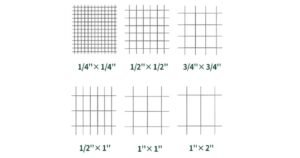
Mesh Size (Opening)
Refers to the distance between wires. It can be measured center-to-center or as the clear opening between wires.
Wire Gauge (Thickness)
Indicates the diameter of the wire. Lower gauge numbers mean thicker wires, which provide greater strength and load capacity.
Rolls vs. Sheets
Rolls: Flexible and easy to transport, commonly used for fencing and agricultural applications.
Sheets (Panels): Rigid and flat, ideal for construction, reinforcement, and industrial use.
Classification by Application
Welded wire mesh can be categorized based on how it is used:
Concrete Reinforcement Mesh (BRC)
Used in slabs, floors, and walls to improve tensile strength and reduce cracking.
Security & Perimeter Fencing
Provides strong, visible barriers that are difficult to cut or climb.
Agricultural & Livestock Use
Suitable for cages, enclosures, and crop protection, such as poultry fencing or garden barriers.
Industrial & Interior Design
Applied in machine guards, storage systems, and even modern architectural elements like wall cladding.
Core Advantages
Welded wire mesh offers several practical benefits:
Dimensional Stability
Maintains its shape under pressure without shifting or deforming.
Customizability
Easy to cut and shape without unraveling, unlike woven mesh.
Cost-Effectiveness
Faster installation reduces labor costs, especially in construction compared to manual tying of rebar.
Selection Guide: How to Choose the Right Mesh
Choosing the right welded wire mesh depends on your project:
Environmental Factors
For outdoor or coastal areas, choose galvanized or stainless steel to prevent corrosion.
Load Requirements
Heavier loads require thicker wires and smaller mesh openings for better support.
Aesthetics
Galvanized mesh is functional, while PVC-coated or powder-coated options offer decorative finishes.
Installation & Maintenance
Best Practices
Use proper tools such as cutting pliers, clips, or staples to install and secure the mesh. Ensure it is tightly fixed to avoid movement.
Maintenance
Regular inspection and simple cleaning can extend service life. Check for signs of rust or damage, especially in exposed environments.
Conclusion
Welded wire mesh is a durable, adaptable, and affordable material that finds use in various industries. Its sturdy design, simple installation process, and availability in different materials make it a dependable option for both structural and non-structural purposes.